


Farm Environment Advisor, Marta Gibbons, has successfully processed Norfolk’s first CS Higher Tier for woodland. This 10 year agreement includes payments for managing, restoring and improving woodland habitats.
An up to date Woodland Management Plan (WMP) as well as Deer Management Plan (DMP) must be in place in order to access the scheme. Currently the Higher Tier scheme is invitation only, prioritising those landowners who have both plans already in place. Take a look below at the woodland and works being carried out as part of the scheme.
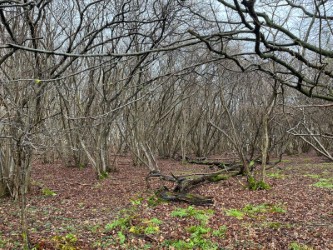
WoodlandHT1 = A new capital item for coppicing FY6 in HT pays 80% of the contractor cost to fell overstood stands. Coppicing is a traditional and now mostly redundant method of woodland management. It is crucial for increasing biodiversity, creating cyclical light-filled habitats. Coppiced material can be used for thatching, hedge laying, crafts and fuel. Temporary fencing needs to be used around coppiced areas to protect the stands from deer browsing. This is also available as a capital item FG10.
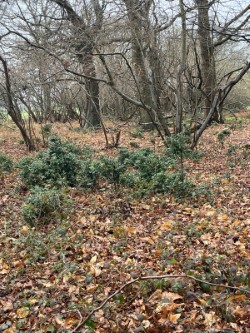
WoodlandHT2 = Holly, the only naturally regenerating species.
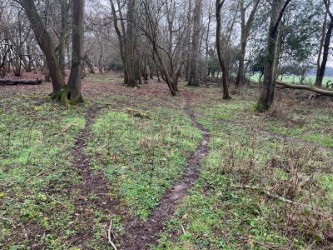
WoodlandHT3 = Deer tracks indicate a huge negative impact on woodland regeneration. Stringent control of deer populations is needed or our woodlands will eventually become dominated by holly, the only species which is seen naturally regenerating.
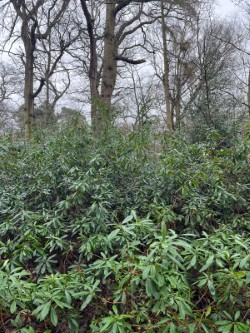
WoodlandHT4 = Rhododendrons have spread or were added to the woodlands in some areas and have very negative impact on ground flora in particular. HT supplement payment CSP12 and additional capital item SB6 are available to help manage this invasive species.
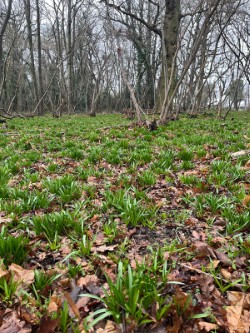
WoodlandHT5 = Bluebells are ancient woodland indicator.
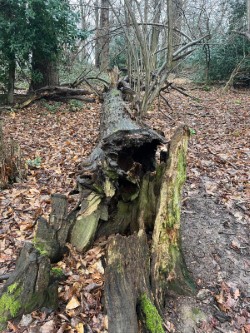
WoodlandHT6 = Fallen and standing deadwood are incredibly important biodiversity hubs. They provide home, food and breeding habitat for an array of invertebrates and birds. Within HT you are expected to ensure both are present in good supply within your woodland