


Over the past few weeks, Abby and Dee have been carrying out a series of great crested newt (Triturus cristatus, GCN) surveys across ponds in Norfolk. GCN are a protected species in the UK and are considered an important indicator of healthy freshwater ecosystems. The presence of breeding populations often reflects good water quality, suitable surrounding terrestrial habitat, and strong pond connectivity within the wider landscape. Monitoring GCN populations helps guide conservation work and informs how ponds can be restored and managed to benefit biodiversity.
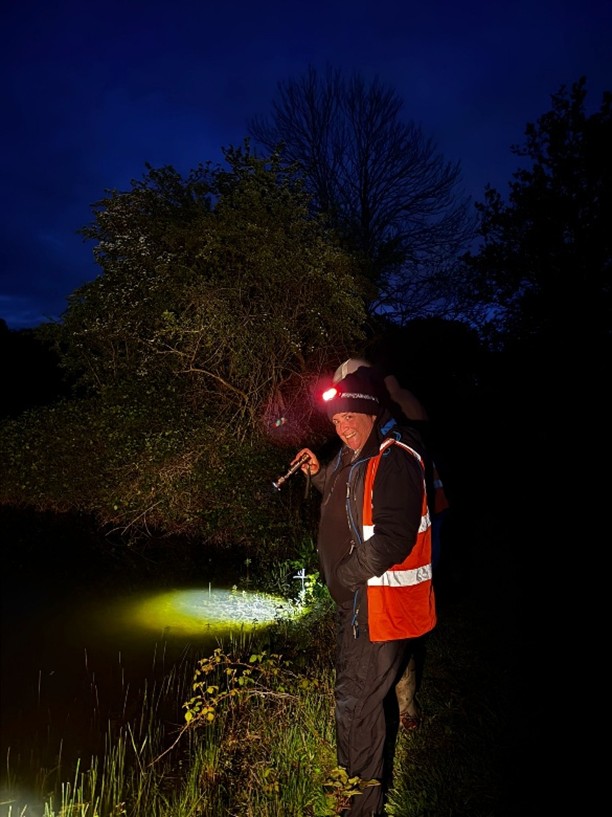
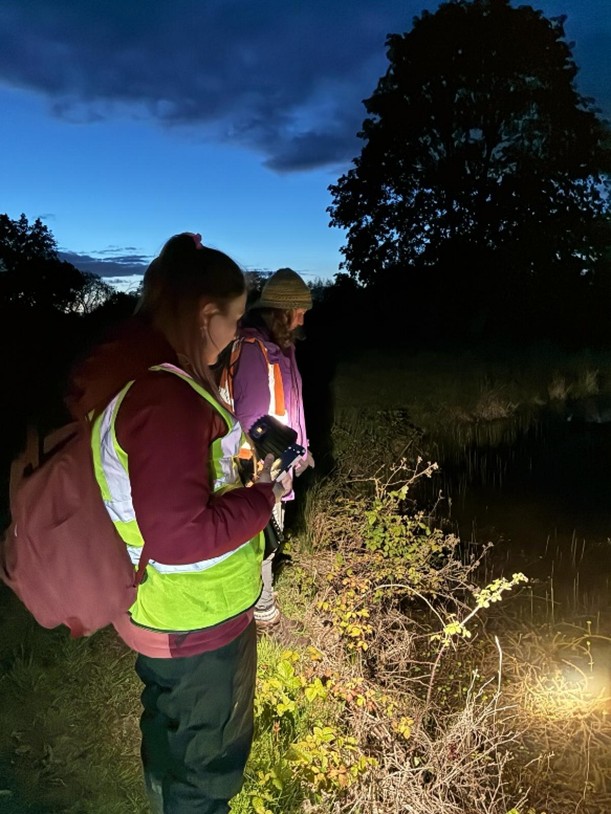
PICTURE 1: Dee (Left) and Abby (Right) using torches to look for newts.
Night-time is the best opportunity to spot newts, as they become much more active and visible beneath the water’s surface during the breeding season. Equipped with torches, waterproofs, and plenty of layers for the colder evenings, we slowly scanned the pond margins and aquatic vegetation for signs of amphibian life.
During this year’s surveys, we recorded both GCN and smooth newts across several sites. GCN are the UK’s largest newt species and are recognisable by their bright orange bellies, dark blotches, and warty skin. Males develop a jagged crest during the breeding season. Smooth newts are smaller, paler, and more streamlined in appearance.
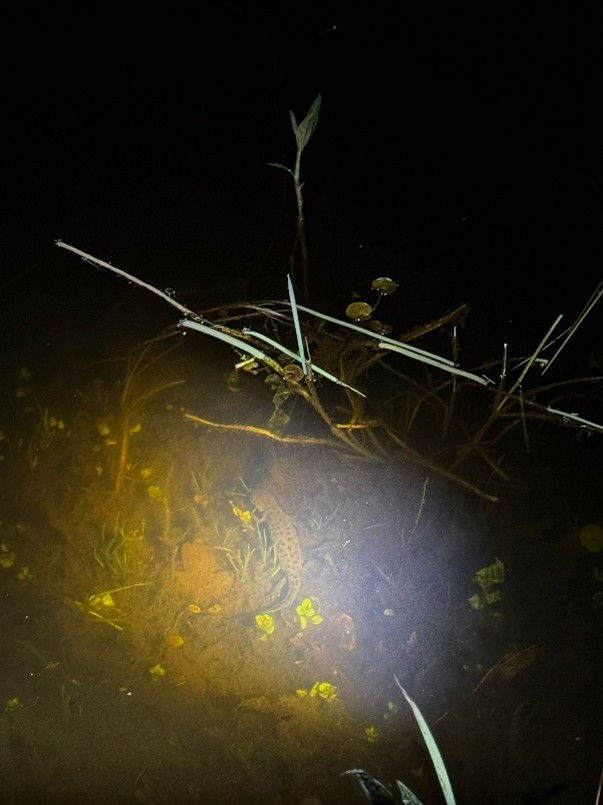
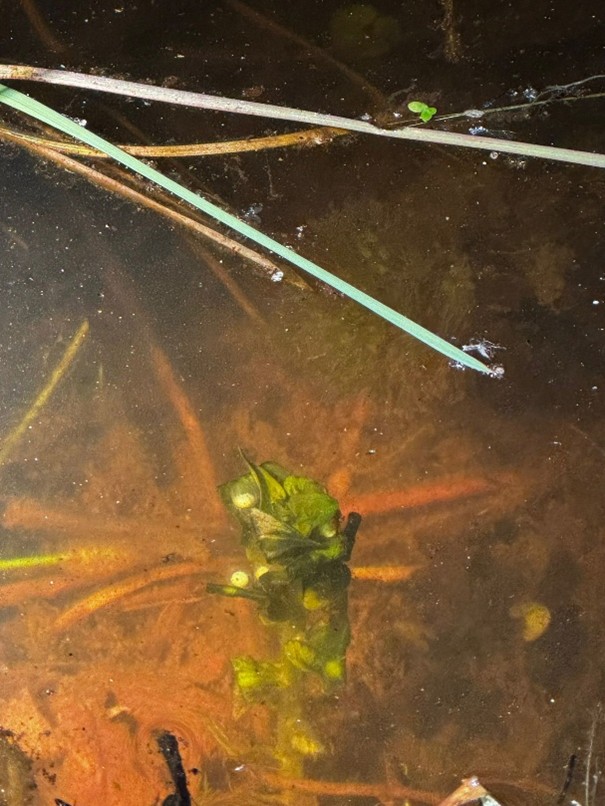
PICTURE 2: Female Great Crested Newt (Left) and Great Crested Newt eggs folded into leaves of aquatic plant (Right).
One of the highlights of the surveys was finding GCN eggs within pond vegetation. Female GCN lay eggs individually and carefully fold each one into the leaves of aquatic plants to help protect them from predators. Finding this is an indicator of successful breeding activity and confirms that ponds are providing valuable habitat conditions for the species.
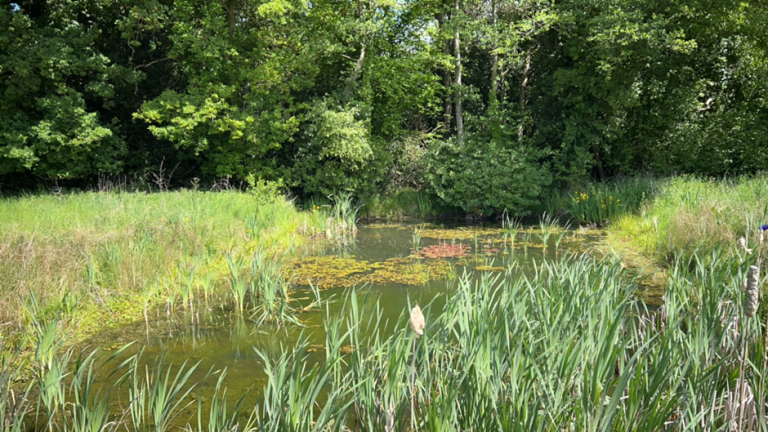
These surveys highlight the importance of farm ponds and small waterbodies for wildlife. Through pond restoration and habitat management, many of these sites become biodiversity hotspots within the farmed landscape.
Norfolk FWAG is a delivery partner for the District Level Licencing (DLL) scheme. Through this scheme, eligible ponds can receive 100% funding for restoration, making it an excellent opportunity for landowners to enhance biodiversity on their land. The scheme funds compensatory habitat for GCN offsetting the loss of ponds due to development.
If you would like to find out more about pond restoration through the DLL scheme, please don’t hesitate to get in touch to organise a free pond scoping visit.